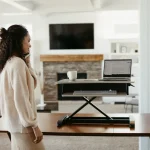
Let’s be honest—the dream of a dedicated home office often collides with the reality of square footage. For many of us, that means carving out a productive workspace right in the bedroom. It sounds like a recipe for distraction, right? Well, it doesn’t have to be. With some clever strategy, you can design a high-performance home office in your bedroom that boosts focus by day and still lets you unwind at night. Here’s how to make that shared space work harder for you.
The Core Challenge: Separating Work From Rest
Your brain is a creature of habit. It associates your bed with sleep and relaxation. Introduce a laptop and looming deadlines into that same visual field, and you’re sending mixed signals. The single most important principle for a bedroom home office is creating a psychological—and physical—divide.
Strategic Zoning is Your Best Friend
Think of it as creating “rooms within a room.” You don’t need a permanent wall. Even a subtle shift can work wonders.
- Use Furniture as a Room Divider: Position a tall, narrow bookcase or a stylish room divider screen perpendicular from a wall. This physically blocks the sightline of your bed from your desk, creating a visual barrier that’s surprisingly effective.
- Play with Angles and Corners: If possible, set up your desk in a corner farthest from the bed. Facing a wall or a window, rather than the sleeping area, helps your mind enter “work mode.”
- Define the Floor: A distinct rug under your office area acts like a literal “zone” for productivity. It’s a simple trick that subconsciously tells you, “Step here, it’s time to focus.”
Choosing the Right Gear for a Compact Space
You can’t fit a massive executive desk in here, and that’s okay. The goal is to select pieces that are scaled for performance, not just for show. Ergonomics are non-negotiable—a sore back will kill your productivity faster than any notification.
The Non-Negotiables: Desk and Chair
Skimp elsewhere, but not here. A height-adjustable desk, even a small one, is a game-changer for alternating between sitting and standing. Pair it with a quality ergonomic chair that supports your spine. Honestly, it’s the foundation of everything.
Smart Storage Solutions That Disappear
Clutter is the enemy of a calm bedroom and a focused work session. You need storage that’s both accessible and invisible.
- Floating shelves above the desk keep supplies off the surface.
- Consider a desk with built-in drawers, or use a slim rolling cart that can tuck away.
- Use decorative boxes or baskets on shelves to hide cables, notebooks, and other desk detritus at the end of the day.
| Item | Space-Saving Tip | Why It Works |
| Monitor | Use a single ultra-wide monitor or a laptop stand with a single external screen. | Reduces hardware footprint vs. dual monitors, declutters the visual field. |
| Keyboard/Mouse | Opt for a compact, wireless mechanical keyboard and a wireless mouse. | Eliminates cable tangles, allows for flexible placement, easy to stow. |
| Lighting | Aim for a layered approach: overhead, task lamp (like an adjustable desk lamp), and ambient. | Prevents eye strain during work; ambient light helps transition the space back to relaxation in the evening. |
Taming the Tech and Light for Better Sleep
This is the big one, the make-or-break for a bedroom office. The blue light from screens and the mental “ping” of devices can seriously disrupt your sleep cycle. You have to be ruthless about boundaries.
- Master the Cable Chaos: Use cable sleeves, clips, and under-desk trays. A tidy tech area reduces visual noise and makes the space feel less like a server room.
- Implement a “Shutdown Ritual”: At the end of your workday, physically turn off monitors, cover your desk with a nice cloth if you can, and—this is key—put work devices out of sight if possible. A drawer works. The goal is to make them disappear.
- Embrace Blue Light Filters: Use software like f.lux or built-in night modes on your devices, especially in the late afternoon. And consider blue-light-blocking glasses—they’re not just a trend.
The Psychology of Color and Décor
Your bedroom likely has a calming palette. Your office zone needs to complement that while providing a subtle energy shift. You don’t want fiery reds, but you might need more than sleepy lavenders.
A great compromise? Use your existing wall color but introduce accents through your office accessories. A sage green desk organizer, a deep blue notebook, or a piece of art with energizing tones on your “work wall” can subconsciously cue your brain. Keep décor minimal and intentional—a plant (real or high-quality fake) adds life without clutter.
Making It Work: The Daily Rituals
The physical setup is only half the battle. The rituals you build around it are what seal the deal. Without the commute to bookend your day, you have to create your own signals.
- Start with a “Mock Commute”: In the morning, take a five-minute walk around the block before entering your “office.” Or, make a coffee and sit somewhere else for a few minutes. This creates a clear transition into work mode.
- Dress for the Part: You don’t need a full suit, but changing out of sleepwear tells your brain it’s business time.
- End with a Hard Stop: Set an alarm for the end of your day. Follow your shutdown ritual. Then, literally leave the room for a bit if you can. The spatial reset is powerful.
It’s About Harmony, Not Perfection
Creating a high-performance home office in your bedroom is an exercise in balance. It’s about finding that sweet spot where productivity and peace can coexist in the same four walls. Some days the balance will tip—a project might spill over, or you might answer an email from bed (we’ve all done it).
But with a thoughtfully zoned layout, the right tools, and those non-negotiable daily rituals, you build a space that supports your ambitions by day and your rest by night. In the end, it’s not about building a perfect office or preserving a perfect bedroom. It’s about crafting a versatile home that adapts to the full spectrum of your life—the focused work, the deep sleep, and everything in between.