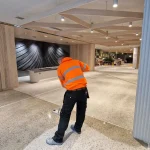
Let’s be honest: floors take a beating. In a busy restaurant, it’s the constant parade of shoes, spills, and chair scrapes. In a family home, it’s the mud, the pets, the dropped toys—the beautiful chaos of daily life. That wear and tear? It’s inevitable. But the premature aging of your flooring? That’s optional.
Here’s the deal: whether you manage a bustling commercial lobby or just want your home’s hardwood to last decades, the secret isn’t a miracle product. It’s a smart, layered strategy. Think of it like healthcare for your floors: daily maintenance is the healthy diet, restoration is the corrective surgery, and the longevity protocols? Those are the lifestyle choices that add years of life. Let’s dive in.
The Daily Grind: Foundational Maintenance for High-Traffic Areas
This is where the battle is won or lost. Daily and weekly care isn’t glamorous, but it’s everything. It’s the difference between a simple clean-up and a costly, full-scale refinishing job down the line.
1. The Right Tools for the Job
Using the wrong cleaner on luxury vinyl plank is like using dish soap on a cast-iron skillet—you strip away what protects it. For hardwood and engineered wood, stick to pH-neutral, manufacturer-recommended cleaners. For luxury vinyl tile (LVT) and laminate, avoid abrasive pads and harsh chemicals that can dull the wear layer. And for commercial-grade vinyl composition tile (VCT) or terrazzo, a proper auto-scrubber and neutral cleaner are non-negotiable.
2. The Entryway Defense System
Up to 80% of the dirt that damages floors is walked in from outside. Seriously. Your first line of defense is a multi-mat system:
- An exterior scraper mat to remove large debris.
- A primary absorbent mat (6-10 feet long, if you can) to capture moisture and finer particles.
- A final interior mat for a last-step wipe.
It’s a simple, wildly effective protocol for floor longevity.
When Wear Shows: The Restoration Mindset
Okay, so despite your best efforts, the floor is looking tired. Scuffs, light scratches, dullness in the traffic lanes. Don’t panic—this isn’t a death sentence. It’s time for restoration, which is less about replacement and more about strategic rejuvenation.
Spot Treatments vs. Full Refinishing
For residential hardwood or commercial surfaces with a urethane finish, a screen and recoat is often the perfect solution. It’s like a facial for your floor: the top layer is lightly abraded, then a new coat of finish is applied. It restores shine and protection without sanding down to the raw material. It’s faster, cheaper, and less disruptive.
Full sanding and refinishing is the major surgery—reserved for deep scratches, water damage, or when you want to change the stain color. For commercial spaces with resilient flooring like VCT, strip and wax cycles are the equivalent process. The key is not waiting until the finish is completely gone. Once wear hits the actual flooring material, costs skyrocket.
The Professional Advantage
Sure, you can buy a buffer at a big-box store. But a professional brings industrial equipment, knowledge of chemical compatibilities, and an eye for issues you might miss—like moisture at the edges or subfloor problems. For a high-traffic commercial flooring restoration, this expertise pays for itself by ensuring the result lasts.
Building a Longevity Protocol: The Long Game
This is the proactive, big-picture thinking. It’s about designing a system that minimizes damage before it happens. A true longevity protocol for flooring blends material science with common sense.
Strategic Material Selection
Choosing the right floor for the traffic pattern is half the battle. That gorgeous wide-plank walnut might be perfect for a master bedroom but a nightmare for a school corridor. Here’s a quick, real-world comparison:
| Material | Best For (High-Traffic) | Longevity Key |
| Commercial-Grade LVT/LVP | Retail, Offices, Kitchens | Thick wear layer (20+ mil), quality underlayment |
| Polished Concrete / Terrazzo | Lobbies, Hospitals, Schools | Regular diamond polishing & sealing cycles |
| Engineered Hardwood | Residential halls, Boutique Hotels | Thick veneer (>3mm) for multiple refinishes |
| Commercial Carpet Tile | Corporate Offices, Libraries | High-density backing, rotation & spot replacement plan |
The Forgotten Factor: Furniture and Fixtures
This one’s a silent killer. Felt pads under chair legs aren’t enough for daily movement. You need high-quality, non-staining rubberized caps that are checked and replaced quarterly. For rolling chairs, use a protective chair mat—but ensure it’s compatible with your floor type. Some mats can trap moisture or react with vinyl, causing discoloration. It’s a minor detail with major consequences.
Scheduled Deep Care
Don’t wait for the floor to tell you it’s sick. Create a calendar based on traffic, not just time.
- Monthly: Inspect for early wear in pivot points (doorways, corners of reception desks).
- Quarterly: Deep clean and inspect the finish integrity. Maybe even do a light buff on commercial vinyl.
- Annually/Bi-Annually: Professional assessment for potential screen & recoat or low-moisture polishing.
This scheduled approach transforms reactive panic into calm, budgetable management.
A Thought to Walk On
In the end, a floor is more than a surface to walk on. It’s a significant investment, a foundational part of a space’s aesthetic, and honestly, a record of what happens there. The scuffs tell stories. But with a smart, layered approach—mixing diligent daily care, timely restoration, and forward-thinking protocols—you ensure those stories don’t become permanent scars.
The goal isn’t a floor that looks perpetually new and untouched. That’s… impossible. The goal is a floor that ages gracefully, that withstands the life happening on top of it, and that retains its character and function for years longer than anyone expected. That’s the real measure of success.